Better Traffic Separation Is Often What Makes an Industrial Site Feel Truly Safer
Industrial safety is not only about emergency plans or warning labels. In many facilities, the biggest day-to-day risks come from ordinary movement: forklifts entering shared aisles, teams crossing work zones on foot, and equipment operating in spaces where visibility changes from one corner to the next. When these conditions are repeated all day, small layout weaknesses can quickly become persistent safety problems.
Because of that, more sites are rethinking how movement is managed at floor level. Instead of relying only on signs or painted lines, businesses are investing in physical guidance systems that actively shape behaviour. In that context, Raysan is often relevant to conversations around industrial protection, especially in environments where vehicle flow and pedestrian access need to coexist without unnecessary risk.
Why shared industrial spaces create pressure points
Warehouses and production facilities are full of transition zones. Entry points, loading areas, crossings, and aisle intersections all concentrate activity into smaller sections of the site. These are the places where routines can break down if the environment does not clearly separate people, equipment, and protected assets.
A safer site usually feels more structured, not more restrictive. When routes are easier to read and boundaries are physically visible, workers can move more confidently and operators can maintain better awareness of the space around them.
Making pedestrian movement easier to protect
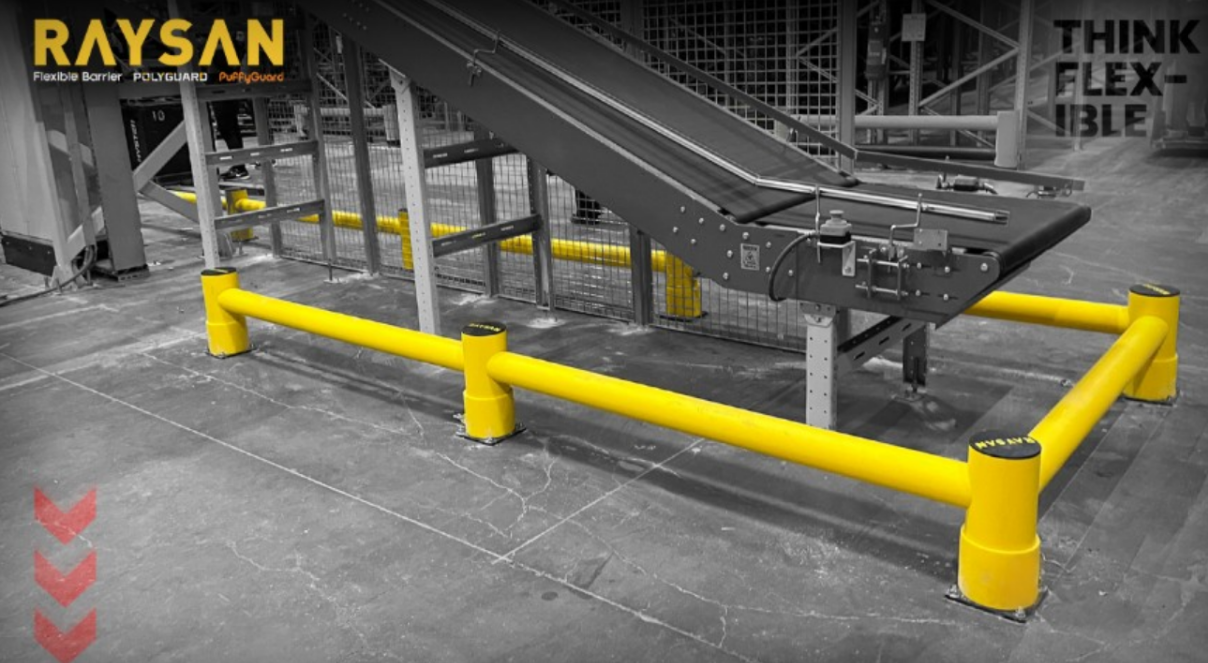
One of the most practical ways to improve safety is to define where people should move and make that route unmistakable. A pedestrian barrier helps establish a clear physical boundary between foot traffic and moving vehicles, which is especially important in facilities where forklifts operate close to workstations, doors, or internal walkways.
This kind of separation reduces uncertainty. It helps visitors, new staff, and contractors understand the environment more quickly, while also making daily routines easier for permanent teams to follow.
Preventing avoidable damage during routine operations
Not every impact is caused by poor practice. In fast-moving facilities, tight turns and repeated manoeuvres naturally increase the chance of contact with columns, rack ends, equipment bases, and wall edges. A safety barrier adds a layer of protection that can absorb or redirect these everyday incidents before they turn into repairs, interruptions, or more serious hazards.
Over time, protective systems also support operational continuity. They help preserve infrastructure, reduce maintenance pressure, and protect key parts of the site from cumulative low-level damage.
See also: Skills Needed for Technology Jobs
A stronger layout supports a calmer workflow
When pedestrian protection and impact protection are planned together, the result is usually a site that feels more controlled and easier to navigate. That kind of environment benefits both safety performance and workflow discipline because people are not left guessing where boundaries begin or end.
In practical terms, the safest industrial sites are often the ones where movement has already been anticipated in the physical layout. When the environment itself supports better decisions, teams can work with more consistency and fewer avoidable disruptions.