How Long SEO Takes to Show Results for a Website

Most businesses see measurable search engine optimization (SEO) results in three to six months, though some websites need closer to a year. This timeline frustrates business owners who need leads now, not months from now.
The frustration grows even more when you see competitors rank higher in search engines while your site sits buried on page three. You’ve maybe tried SEO before and didn’t see results fast enough, so you gave up. But you don’t have to accept that anymore.
We’ll share our experience to help you out. Our team at Matter Solutions has managed hundreds of SEO campaigns and helped businesses understand realistic timelines.
Based on what we’ve learned, this article breaks down why search engines need time and what factors speed up or delay your progress. You’ll also see exactly what happens month-by-month during an SEO campaign.
Keep reading to understand the SEO results timeline you should expect.
What’s a Realistic SEO Results Timeline?
As we already mentioned, most established websites see noticeable ranking changes within three to six months after implementing SEO improvements and optimizations. You see movement at that point because search engines have finally crawled your updates, tested them against competitors, and confirmed your changes actually help users.
Meanwhile, brand new websites need six to twelve months because Google has no trust signals or historical data to work with. They’re starting from zero, which means every piece of content and every backlink needs time to build credibility.
The reality is that conversions and revenue take longer to arrive than organic traffic does. You need sustained visibility before people recognize and trust your brand enough to call or buy.
Why Search Engines Need Time to Process SEO Changes
Search engines take time to crawl your changes, test them, and confirm they help users. Here’s how that process unfolds behind the scenes:

Crawling and Indexing Take Time
Before Google can rank your changes, it needs to discover your updated pages, which happens on a crawl schedule you don’t control directly. Once crawled, Google indexes the content and compares it against millions of other pages competing for the same searches.
Usually, larger websites with hundreds of pages take longer to get fully crawled and indexed than smaller sites. You can check your crawl status in Google Search Console to see when search engines last visited your pages.
See also: Skills Needed for Technology Jobs
Search Rankings Go Through Testing Phases
Google runs a transition period where your page bounces up and down in rankings unpredictably for weeks (annoying, but necessary). This volatility discourages people from making manipulative changes just to trick the algorithm into ranking them higher faster.
We’ve seen rankings jump by 20 or 30 positions during this phase before they settle. However, your rankings eventually settle once Google confirms your changes actually helped users who searched those terms. The testing phase is part of every solid SEO strategy.
Content Optimization Needs Proof of Value
Search engines watch how people interact with your updated page before deciding it deserves to rank higher permanently. They measure click rates, time on page, and whether visitors return to search results looking for better answers.
When those signals turn positive, search engines gradually trust your page more based on user engagement and push it up in organic search results over time. And honestly, content optimization only works when users actually engage with what you’ve created.
Factors That Speed Up or Delay Your Timeline
Not all websites face the same timeline because your site’s age, backlink profile, and niche competition determine how fast Google will trust and rank your content.
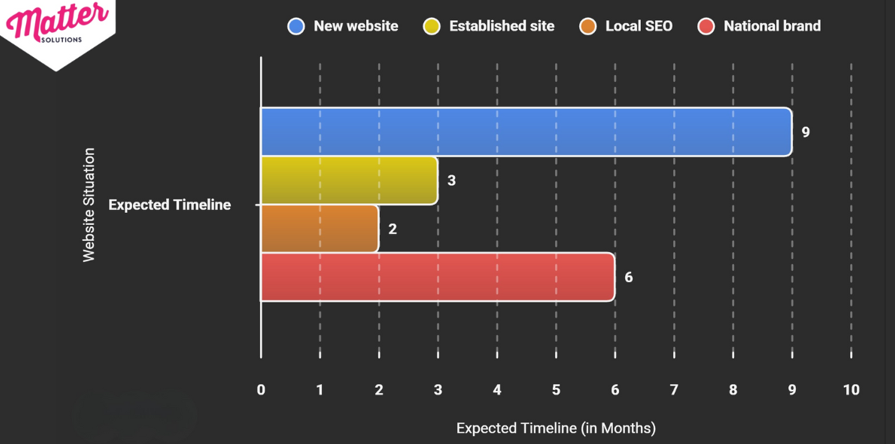
In practice, your starting point is really important when predicting how fast you’ll see search engine optimization results. The most common scenarios include:
| Your Situation | Expected Timeline | Main Challenge |
| New website with zero backlinks | 9-12 months | Building trust from scratch |
| Established site needing content updates | 3-5 months | Competing against current rankings |
| Local SEO in a small market | 2-4 months | Limited but fierce local competition |
| National brand in a saturated niche | 6-10 months | Outranking established authorities |
What’s more, crowded industries with dozens of optimized competitors require more time than niches where top results have weak search engine optimization. Unlike Google Ads that show results immediately, organic SEO requires patience.
Worth Noting: Sites with strong domain authority and clean technical foundations move faster than those needing major risk assessment and fixes before optimization begins. So partner with experienced SEO specialists to identify bottlenecks early and accelerate your timeline.
What SEO Services Do During the Wait
SEO services spend the waiting period building backlinks, fixing technical issues, and creating content that compounds over time. Their work also involves continuous monitoring and adjustments.
Understanding what your SEO team does during these months shows why you shouldn’t rush the process. So we’ll break down the three main areas of focus in this section.
1. Off-Page SEO and Link Building
Off-site SEO work happens continuously throughout your campaign. SEO specialists reach out to relevant websites and create partnerships that earn quality backlinks pointing to your content.
However, strategies like link building take months because search engines penalize sites that acquire too many links quickly. Each earned link tells Google that other trusted sites consider your content worth sharing with their audience.
Keep in Mind: Building links naturally requires consistent outreach, relationship development, and creating content others actually want to reference.
2. Meta Descriptions and Technical Fixes
Sometimes the biggest ranking blockers are technical issues you can’t even see on the page. That’s why your SEO services team runs technical audits to catch problems early.
They optimize meta descriptions, title tags, and meta tags to help search engines understand what each page offers. With these audits, the team identifies crawl errors, broken links, and speed issues that quietly block your site from ranking well.
Once your team identifies these problems, they remove barriers that were stopping your existing content from performing better in search results. On-page SEO improvements happen alongside technical fixes to maximize your visibility.
3. Content Marketing for Long-Term Growth
SEO services create new blog posts, guides, and resources targeting relevant keywords your prospects actually search for regularly. They use keyword research to guide what topics to cover and which terms to target.
When you publish consistently, search engines see that your website stays active and relevant in your industry. Each new piece of quality content creates another opportunity to rank and attract visitors from organic search.
Month-by-Month: What to Expect From Your SEO Campaign
Now that you know what affects your timeline, here’s what actually happens during each phase.
- Month 1 – Foundation Building: Your SEO campaign starts with understanding where you stand and what needs fixing first. So in month one, the focus is on audits, keyword research, and technical fixes that create a solid foundation for future growth.
- Months 2 to 3 – Early Implementation: Months two and three involve implementing on-page changes, publishing new content, and starting outreach for backlink opportunities. You’ll start seeing your SEO work take shape in real time as your team optimizes pages and publishes new content.
- Months 3 to 6 – Testing Phase: In this stage, you’ll see early traction, where keyword rankings bounce unpredictably due to algorithm testing. This phase tests your patience, but it’s normal.
- Month 6+ – Stabilization Period: After six months, rankings usually settle down, and you see measurable increases in organic traffic from improved positions. No more wild fluctuations, just steady upward movement as your online visibility improves.
- Months 6 to 12 – Momentum Builds: Your search engine optimization efforts start paying dividends as domain authority builds. Plus, modern strategies now include emerging areas like AI SEO and generative engine optimization powered by large language models. That means your content can now appear in AI-powered search experiences beyond traditional search engines.
- Month 12+ – Long-Term Growth: Beyond twelve months, your site benefits from built-up trust, where new content ranks faster because search engines recognize you.
While results take time, you’ll see faster results if your site already has decent authority and just needs content optimization instead of a complete rebuild.
Ready to See Fruitful Results? Here’s Your Next Step
In a nutshell, understanding the SEO results timeline sets realistic expectations and prevents panic when rankings fluctuate in the early months. Instead of relying solely on pay-per-click advertising that stops the moment you pause spending, search engine optimization builds sustainable business growth that compounds over time.
The waiting period pays off when you finally reach page one and start seeing qualified leads find your business organically. If you’re ready to start seeing real, measurable results in search rankings, let’s talk about building an SEO strategy for your site.
Contact Matter Solutions today to discuss your search engine optimization timeline and get started.