Decoding In-Store Behavior: The Hidden Value of Traffic Counters in Retail Analytics Software
In the age of data-driven retail, observing customer behavior inside physical stores is just as crucial to track as online behavior. As much as eCommerce brands need digital analytics, physical retailers can benefit from retail analytics software driven by a traffic counter. These tools reveal insights on footfall, movement and engagement that were previously hidden—enabling retailers to make smarter decisions and remain competitive.
This blog discusses the working of a traffic counter, why it is an important feature in retail analytics software and how it is crucial for decoding in- store behavior.
Historical Review In-Store Behaviour in Retail Industry
In-store behavior encompasses customers’ physical interactions with an actual retail space—from the entrance of the store to browsing aisles, interacting with displays and completing a transaction. Conventional retail had to be reliant on manual observation or sales, while just providing very limited visibility.
Today’s retail analytics software fixes that by capturing up-to-the-second information on customer behaviors. At the heart of this change is the traffic counter, the building block for analyzing customer presence and movement in a store.
What Is a Traffic Counter?
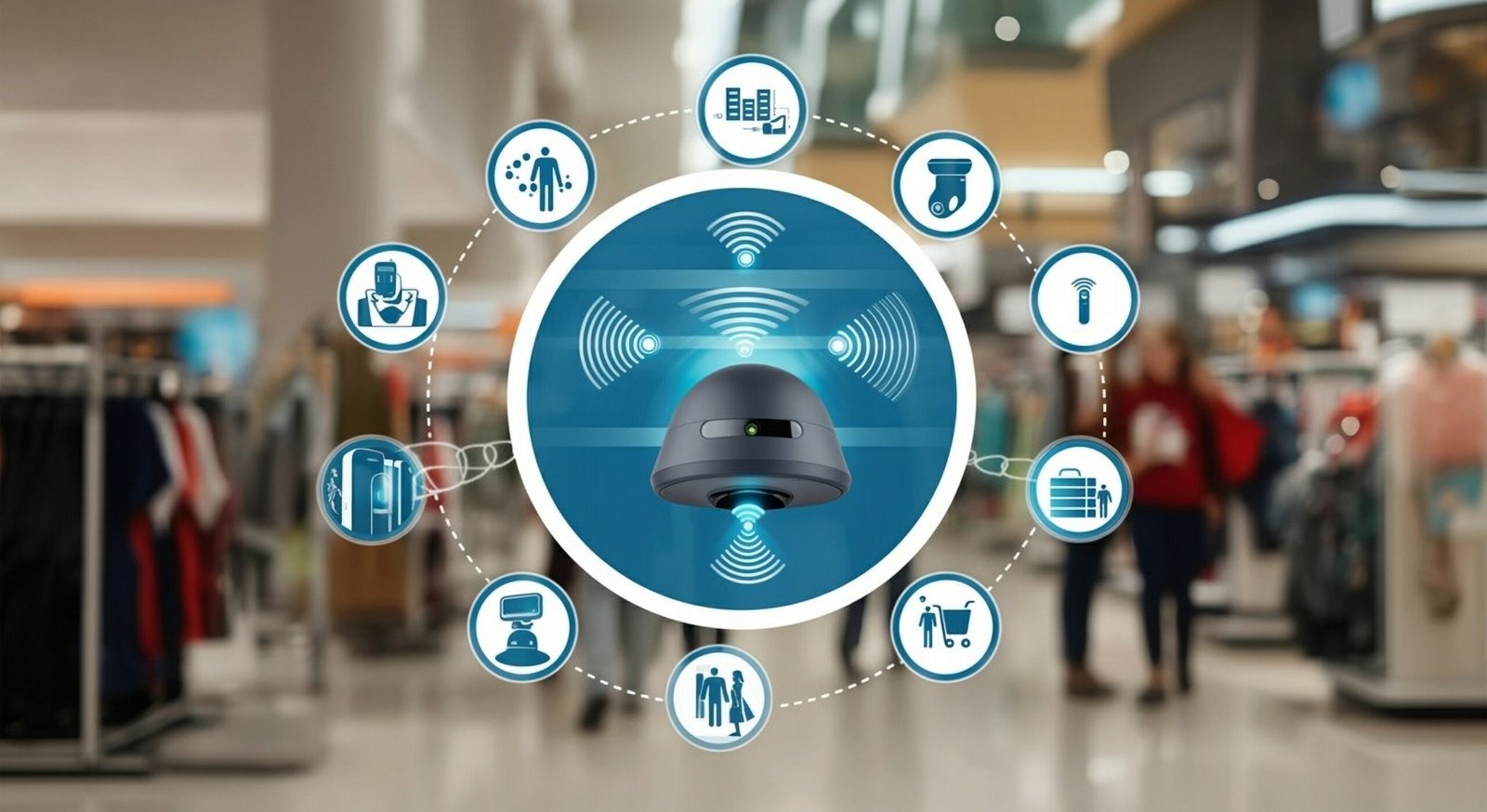
A traffic counter is a hardware device or software program designed to count, count the number of people entering, exiting through an entrance, entering using one door and leaving from another, or pass by a certain location. Such counters can be infrared beams, thermal sensors, AI cameras or even Wi-Fi signals to track footfall with precision.
When linked with retail analytics, a people counter doesn’t just count heads; it interprets that raw data into actionable insights—like when your peak hours are, how long visitors stay, and patterns in conversion rates.
Traffic Counters and Retail Analytics Software
As part of built-out retail analytics software, a footfall counter gets much more useful חלק 2פתרונות מידעבו´בני`ה1שלמוןTell me more. And they combine to form a cohesive software solution saving retailers:
- Assess store performance beyond sales figures.
- Understand customer engagement levels
- Optimize layouts and staffing
- Compare performance across locations
Retail analytics tools take traffic counter data and use it to create boards, reports and predictive information that helps make more marketing decisions.
Key Retail Intelligence that Traffic Counters Can Provide
Footfall Analysis
An entrance counter offers reliable people counting, so retailers know how many consumers enter their store on a daily, weekly or monthly basis. Retail analytics software supports in analyzing trends, tracking growth patterns and measuring the impact of marketing campaigns.
Conversion Rate Optimization
Retail analytics software uses a traffic counter that counts footfall and compares it to sales to generate in-store conversion rates. This allows retailers to understand the effectiveness of visitors turning into buyers.
Dwell Time and Engagement
Sophisticated traffic counters monitor how long customers linger in certain areas. This data is visualized in retail analytics software to showcase high- and low-engagement areas for improved merchandising, layout planning.
Peak Hours and Staffing Efficiency
Peak shopping times are recorded in the traffic counter data. Retail analytics software takes advantage of this knowledge to adjust staffing levels based on customer input, minimizing wait time and increasing level of service.
Enhancement of store layout and visual merchandising
Store design influences customer experience in a significant way. One is a traffic counter that follows the path of movement, and the other is retail analytics software that turns path movement into heatmaps and flow.
These insights help retailers:
- Identify underperforming areas
- Improve product placement
- A/B test new designs using real-world customer behavior
Using traffic counter information rather than conjecture, retailers are able to develop store layouts that strategically direct customers toward high value items.
Measuring Marketing and Campaign Effectiveness
Retailers have difficulty quantifying the offline effect of promotions. A traffic counter, when paired with retail analytics software, serves as the bridge.
Measure Impact Measuring automation’s impact- By tracking footfall pre-, mid- and post-mobilization retailers can:
- Measure campaign-driven store visits
- Compare performance across locations
- Optimize future promotions
This is a data-centric strategy that makes certain marketing dollars at POS are generating measurable in-store returns.
Enhancing Customer Experience Through Data
It’s no longer enough for a store’s service to be friendly, or its displays attractive—it must offer seamless, personalized journeys instead. Retail analytics driven by a traffic counter can unearth pain points like overcrowding, slow moving lines or confusing layouts.
They can work to fix it before it happen, allowing for a better shopping experience and prompting more return visits: they make the shopper feel valued.
Scalability and Multi-Store Performance Comparison
Well, with retail chains, you want consistency from one store to another. Centralized retail analytics software compiles data from a number of stores via a traffic counter, to benefit from benchmarking.
Retailers can compare:
- Footfall trends by location
- Conversion rates across regions
- The effect of store sizes and layouts
This intelligence provides the foundation for smarter expansion methods and operation alignment.
What is the Future of Traffic Counters in Retail Analytics Software
High tech traffic counting devices are becoming more intelligent and accurate as technology progresses. AI based sensors with cloud generated retail analytics software have made insights real time, predictions are more intuitive and we now understand behavior better.
Going forward, traffic counter data will be even more integrated with POS systems, CRM apps and inventory management solutions to form a completely connected retail environment.
Conclusion
Deciphering in-store behavior is now not just the province of massive retailers with millions to spend. With the right people counter and powerful retail analytics software, retailers big or small can begin to unlock these hidden insights in their physical spaces.
Everything from traffic counting, layout optimization and staffing to conversion rate improvement and customer satisfaction are backed by traffic counters in today’s retail analytics software. Retailers that adopt these tools today are more amenable to compete, adjust and prosper in an environment where data reigns supreme.
FAQs
1. What is a traffic counter used for in retail?
A people counter records foot traffic and customer movement in a given store, collecting critical information that retail analytics software reads to assess a store’s behavior and performance.
2. How does retail analytics software work with traffic counter data?
Traffic Counter traffic counter data is turned into insights, like conversion rates and dwell times, peak hours and customer flows.
3. Do people counting systems work in retail?
Yes, the latest traffic counters are equipped with fancy technologies such as AI and thermal sensors that guarantee high degree of precision even in crowded retail spaces.
4. Is retail analytics software useful for small retailers too?
Absolutely. Scalable retail analytics software joined with a traffic counter that can help small retailers to make strategic decisions based on facts rather than guesswork.
5. How do traffic counters deliver enhanced customer experience?
Yes. Traffic counters and retail analytics software can help retailers to improve the total in-store experience by showing where congestion, low-engagement zones are, and at what hours.